
Unexpected Paths: How a Post Brought Us to Finca Mas Perdut
- Christopher 'Cp' Richardson

- Sep 30, 2025
- 7 min read
Updated: Oct 14, 2025
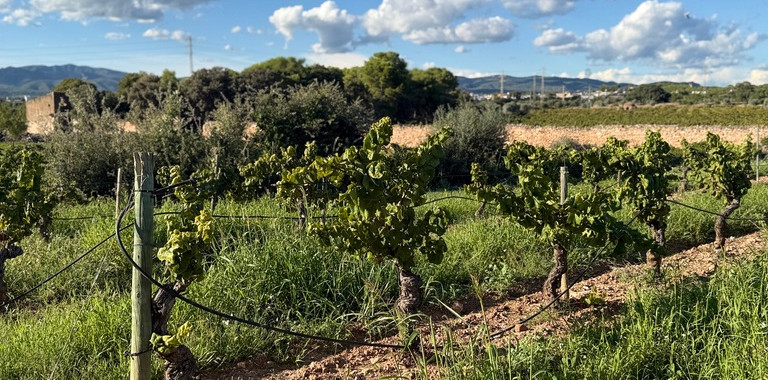
The sun was low when we stepped into the rows at Finca Mas Perdut. Old goblet-trained vines stood wide and gnarled, their roots sunk into clay and limestone. Stones crunched underfoot. Around the parcel, olive and almond trees marked the edges, reminders that this land has always been more than vines. Most of the plants here are between 68 and 70 years old, with some even older. A few young vines replace those lost to drought, but the mission is clear: protect the heritage, recover ancestral varieties, and keep the farm alive with biodiversity.
Farming here is minimal but intentional. The soil isn’t tilled; wild vegetation is left in place to feed the earth and attract insects. Copper and sulfur appear only when needed. Before autumn rains, the soil is open, allowing water to sink deep. During the dry years, drip lines were installed in the oldest plots, not to push yields, but to keep ancient vines alive. Even so, yields remain deliberately low: usually 1.01.5 kilos per vine, rarely more than 2.5 kilos.
Rebeca and Josep explained how Baix Penedès differs from Alt. Here, soils are sandy, stony, and calcareous. Alt, with its rich red earth, is heavier and more fertile. The farming, they said, follows the ground, not a recipe.
Family and Growth
Finca Mas Perdut has been in the family for generations, but the estate only began bottling under its own name in 2010. When Rebeca joined Josep in 2015, she brought a new web presence, fresh suppliers, and the push to scale production. From just a few thousand bottles, they’ve grown to around 38,000.
Exports started in 2019, paused during the pandemic, and resumed in 2021. Today, approximately 80% of the bottles are exported abroad to countries such as Canada, France, Denmark, Italy, the UK, and Japan. The rest stay closer to home, in Barcelona, Girona, Menorca, and the Basque Country. The team is still just four: Josep, Rebeca, his father, and his brother, with seasonal help brought on for pruning and harvest.
The dream is simple: to live fully from their wines and olive oil. For now, Rebeca still works weekdays at another cellar, while Josep runs the finca full-time. Consolidation, they told us, will make that future possible.
Inside the Cellar
The cellar is compact but layered with character. Six stainless steel tanks, each approximately 5,000 liters in capacity, fill the main room. Another building holds smaller 3,000-liter tanks for maceration and fermentation. Amphorae of 1,000-1,600 liters stand nearby, joined by old acacia and chestnut barrels, and rows of 54-liter demijohns.
The range splits into two: a 100% natural line and a more classical, gastronomic line. Grapes are destemmed and pressed in the other building, where fermentations begin on native yeasts. Midway, the wine is transferred into larger tanks to complete the fermentation and aging process. Elevage is kept short, at five months for whites and nine to eleven months for reds, to preserve freshness and aromatics.
Every choice is about letting the vineyard speak for itself. Acid balance protects the wines, while careful harvest dates minimize intervention. Old wood, not new, avoids overpowering flavors. Amphora and acacia provide texture without masking terroir. Demijohns round the palate, the suspended lees softening edges into something fuller. Lights stay off unless visitors arrive, another quiet nod to patience.
As for barrels, Josep is clear: they won’t sell used wood. The risk of contamination is too high, and sterilization would strip the very character others might be chasing. Their focus remains here, on their own élevage, where detail and restraint define the work.
Q: How did Mas Perdut grow to today?
Rebeca: I joined in 2015. We refreshed the website, expanded our supplier base, and increased bottling from a few thousand to six or seven thousand, and then further. We began exporting in 2019, paused with the pandemic, and restarted in 2021. Now we’re about 38,000 bottles.
Josep: We export roughly 80%. The rest is sold around Barcelona and Girona, as well as some of the Basque Country, and Menorca.
Q: Team and harvest. How do you run the work?
Rebeca: Day-to-day, it’s four of us: Josep, his father, his brother, and me. At pruning and harvest, we add seasonal help. Otherwise, it stays lean.
Q: Walk us through the field.
Josep: Around 68-70 years old. Mostly old goblet vines. We lost plants in the drought, so a few rows have young replacements. We’re recovering ancestral varieties and shifting away from older French plantings, such as Chardonnay and Merlot.











Q: Which ancestral grapes are you bringing back?
Rebeca: Xarel·lo for sure, Xarel·lo Vermell, Sumoll, and other locals. The idea is to represent Baix Penedès, not copy a style.
Q: Farming choices we can see on the ground?
Josep: No tillage; we keep cover vegetation. It feeds soil life and insects. We open the ground before autumn rains so water can penetrate. We use copper and sulfur only when needed. It’s organic and regenerative by design.
Rebeca: Winter freezes, when they arrive, disinfect naturally. With fewer cold spells, we rely more on canopy work and timing.
Q: Drought response. What did you change?
Rebeca: We installed drip lines in select old parcels to save vines, not to increase yield. We draw from on-site wells when necessary. In recent years, some vines and even olive trees have died. That was new for the family. The drip keeps heritage vines alive in extreme seasons.
Q: Yields sound low. How low is low?
Josep: Around 1.0-1.5 kg per vine across much of the estate, sometimes 2-2.5 kg in specific rows. Old vines, poor soils, and drought all lower vigor. We prefer concentration to kilos.
Q: Baix vs. Alt Penedès, how does it change your work?
Rebeca: Here we see sandier, stonier, calcareous soils. Alt Penedès has redder, richer soils with higher levels of organic matter. Different soils push different canopy and harvest decisions.
Q: Visitor expectations. What should people know before they come?
Rebeca: This is a farm, not a resort. Many visitors arrive informed and want the tour: rows, soils, cellar, then tasting of wines and olive oil. Some come because they've tried a bottle and want to hear the story. That’s the best way: arrive curious, leave connected.
Q: What do you want them to remember after the visit?
Josep: The varieties and the work. We begin with an explanation of the vineyard, followed by a description of the process for each wine, and then we conclude with a tasting.
Rebeca: We are recovering ancestral grapes that many locals are barely aware of. And the labor is real, seven days a week, with short holidays. When people return with friends, that tells us the message landed.
Q: Cellar setup and flow. How do grapes become wine here?
Rebeca: Destem and press in the other building. Skin macerations are standard to extract aroma and texture. Native yeasts start fermentation there in smaller tanks. Mid-ferment, we transfer the wines into 5,000L stainless steel tanks here to complete the fermentation and aging process.
Josep: We track density and temperature and do lab checks. Acidity is our natural safeguard.





Q: Aging choices and timelines?
Rebeca: Whites ≈ 5 months. Reds ≈ 9-11 months. We bottle wines young, fresh, aromatic, with moderate alcohol. We use old acacia and chestnut barrels, amphorae, and demijohns.
Josep: Demijohns don’t add flavor but round the palate faster, helped by suspended lees. Amphora keeps edges clear. Old wood avoids oak imprint.
Q: What does success look like for your family?
Josep: To live from our own wines and olive oil. To stabilize sales and work here together every day.
Rebeca: And to pass on the values to our child. Whether he farms or codes, he should know the land that raised these bottles.
Wrap-up
This visit closes the series where it should end: in a working vineyard with a family that treats wine as stewardship. Old goblet vines. Ancestral grapes returning to their rows. Regenerative farming that leaves vegetation in place and encourages the return of insects. A cellar that uses steel, amphora, old acacia and chestnut, and demijohns to shape texture without drowning the place.
Rebeca and Josep aim for clarity. Fruit first. Freshness and line. Honest alcohol. Small lots that reflect Baix Penedès rather than trends. They export widely, but the work stays local, seven days a week, season after season.
If you have read Part 1 or Part 2, you are now familiar with the pattern. People first. Soil second. Wines as the translation. Finca Mas Perdut ties it together with a family that keeps repeating the same quiet sentence: 'Protect the land, tell the truth, and let the bottle carry the story home.

Spotlight: Pulmó de Mas Perdut
Grapes and Method
Xarel·lo Vermell brings citrus lift and savory depth. Macabeu adds roundness and a floral edge. The wine is made by the ancestral method: a 72-hour fermentative maceration in stainless steel to extract aroma, structure, and color. The must is bottled at optimal density, allowing fermentation to finish inside the bottle and creating a natural, integrated bubble. It rests for six months on lees before disgorgement and is refilled with the same wine. No sugar. No additives. Nothing to mask the origin.
Tasting Profile
Cloudy orange-pink in the glass. Aromas of dried citrus peel, bitter almond, and wild herbs. On the palate, it is dry, fresh, and very lively, tracing a clear line from start to finish. The mousse is soft, persistent, and perfectly in step with the wine. Pulmó is straightforward and joyful—built to be enjoyed rather than dissected.
Food Pairing Ideas
Aperitif with olives or salted almonds. Grilled sardines or mussels in escabeche. Tomato-rubbed bread with anchovies. Young goat cheeses. Seasonal grilled vegetables. The freshness sharpens the taste of salty, oily foods; the soft texture bridges the gap between simple tapas and more substantial plates.
Why We Selected It
Native grapes. Honest craft. Micro-scale. Pulmó fits our lane because it captures energy without pretense. It reads as both rustic and precise, a sparkling wine made for shared tables, seaside evenings, and meals that last until dusk.


Comments