
All Natural: Giulio Pagni of Giulio & Gaia Vinyataires, Penedès
- Christopher 'Cp' Richardson

- Sep 30, 2025
- 6 min read
In Part 1, we met a prospective producer in Penedès and explored the region’s roots. This chapter delves into the rows with our current supplier, Giulio and Gaia Vinyataires, to see how their farming choices are reflected in the glass.
Giulio Gaia Vinyataires
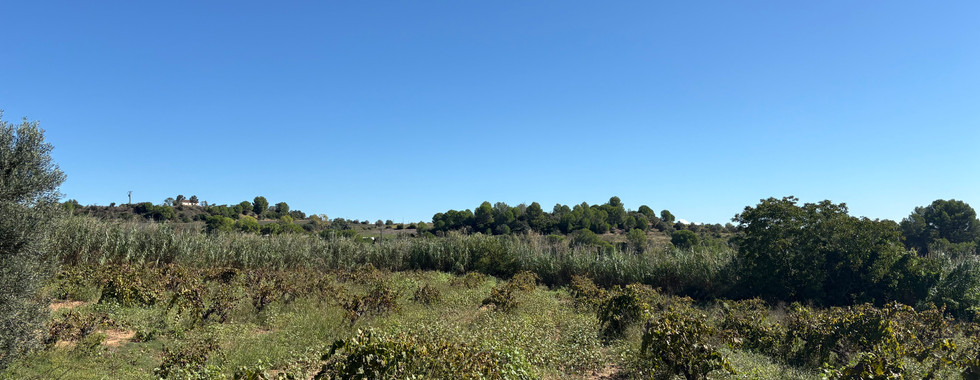
Giulio Pagni took us through the vineyard, showing us each vine. The topsoil is a mixture of clay and gravel, with limestone from Montserrat underneath. We saw old goblet-trained Xarel·lo and Macabeu vines, along with some historic red grape rows. Surrounding the vineyard, we noticed various trees, including Arbequina olives, almonds, figs, walnuts, persimmons, and pomegranates. These trees create a diverse farm look rather than a neatly arranged garden.
Walking the Vineyard in Penedès
As we explored a Xarel·lo plot in Sant Joan Samora, we observed the clay and gravel topsoil and the limestone below. The vines are old, which results in low yields but high concentration. The variety of trees surrounding the plot emphasizes the farm's rustic character, which is intentional.
Q: Give readers your short origin story. Who are you, and why Penedès?
Giulio Pagni: We are Italian vignerons who settled in Penedès because the place fits how we want to farm. Old vines, native grapes with real identity, and a climate where you can grow with few inputs if you work carefully. I was already involved in the local wine industry, learning about the area through other producers, which opened the door to renting our first plot. One plot became several. Farming led to making.
Q: What is your farming philosophy in plain language?
Giulio: Grow a healthy ecosystem first. We are organic certified and in the process of conversion to biodynamic. We avoid pesticides and heavy chemistry. We manage cover crops, maintain open soil structure, and perform nearly all tasks by hand. We accept that the vineyard looks wild after harvest. That is fine. The priority is active soil life, clean fruit, and natural acidity, so the cellar can stay simple.
Q: Why are there interplanted trees around your parcels?
Giulio: It is traditional here to mark vineyard limits with olive trees. They also diversify the plot. You receive various organic matter inputs, wind protection, and staggered harvests, which spread the workload across seasons. We have Arbequina olives, almonds, figs, walnuts, persimmons, and pomegranates. We eat the figs in season, make pies or jam if we are lucky, and we pick green walnuts around Sant Joan to make ratafia with local herbs like thyme and rosemary.
Q: How does winter cold matter if you avoid synthetic sprays?
Giulio: Cold nights in January are a natural reset. A week of sub-zero temperatures is the best disinfection against fungi and pests from the previous season. With climate change, we see fewer deep freezes, so we rely more heavily on canopy discipline, timing, copper, and sulfur when needed, as well as biodiversity management.
Q: What pressures do you watch late season?
Giulio: A small green leaf-sucking insect arrives after picking most years. It dries leaves and can stop ripening if it comes too early. We strive to balance the populations of predators and prey. If you eliminate one insect entirely, you may remove the natural control on another. The point is balance, not eradication.
Q: Soil and vine architecture came up a lot on our walk. Summarize both.
Giulio: Topsoil is clay with some gravel. Under that is limestone linked to Montserrat. Clay brings body, limestone brings line and minerality. Many vines are old, goblet-trained bush vines, planted before tractors. Yields are low. Quality and concentration are high. In very old parcels, you lose a plant here or there each year. You either accept a gradual yield decline or replant in a clean sweep when the time comes.
Q: You call Xarel·lo the queen of Penedès whites. What makes it central for you
Giulio: Xarel·lo is versatile. Fresh and direct as a young white. Deep and textural with skin contact or time in neutral vessels. It does not shout aromatics, so it conveys the soil's character clearly. In our clay-over-limestone parcels, it shows length, salt, and herb tones.
Q: Where does Macabeu fit in your cellar?
Giulio: It is widely planted here and beyond. Less canopy vigor than Xarel·lo. It brings floral notes and lift. We use it for still wines, often blending based on the year’s acid and alcohol balance.







Q: Reds in your blocks look scattered and old. How do you use them?
Giulio: Some rows have Cabernet, Merlot, and Tempranillo, as well as others, mixed in from pre-mechanization days. It is part of the history. We pick them when we harvest the white block, which can leave reds a touch firm. They end up in small blends with Garnacha or other parcels. Scale is tiny by design.
Q: How do you decide when to pick? What were you checking as we tasted grapes?
Giulio: Phenolic ripeness leads. Brown, crunchy seeds. Skins with flavor and elasticity. Acids that taste bright, not sharp. If the fruit is balanced, we need fewer moves later. We are happy to do less in the cellar.
Q: Outline the cellar rules that never change.
Giulio: Native fermentations. Gentle handling. Minimal moves. Vessels that add texture without masking the place. We rack for clarity, not polish. We choose wood, amphora, or stainless for function, not style points.
Q: Do you plan to make traditional-method sparkling (cava) or stick to still and ancestral styles?
Giulio: Never say never, but traditional-method sparkling requires more technology and time. Our other distributors have already asked us to produce fewer cuvées and increase the volume of the core wines. For now, we focus on what we can farm and vinify with precision at a small scale.
Q: What is a realistic picture of your scale?
Giulio: Small. Think one amphora here, one chestnut barrel there, or a single barrique for a red. We would rather bottle less and keep character than chase volume.
Q: Penedès versus places like Champagne or California came up. Your take
Giulio: Different climates and traditions make different wines. Here in Penedés, summers are hot and winters are milder. You get more volume and ripeness than Champagne, less cut. Compared to much of California, our style is leaner, lower-input, and more tolerant of the vineyard looking alive rather than manicured. Neither is better in absolute terms. They are expressions of place.
Q: How do your wine economics classes connect to farming?
Giulio: I teach wine economics at the CIEE Barcelona. It keeps my head sharp and helps me explain choices to students and, honestly, to myself. The combination of economics and farming is useful when deciding between replanting, maintaining old vines, or allocating scarce labor.
Q: Vintage, lineup, and consistency for buyers. What should people expect year to year?
Giulio: We bottle by vintage. Entry-level wines, such as our staple white and red, appear every year, but blends and methods evolve with the fruit. Single-parcel or longer-elevage wines appear when the year warrants it. If yields are tiny, we prefer to bottle less rather than force a style.
Q: Practical home service tips for your wines.
Giulio: Whites and any ancestral bubbles cool but not icy. Lighter reds around 12 to 14 °C. Ordinary stems are fine. Minimal aeration on delicate cuvées. Let the bottle evolve across a meal.
Continuing at Mambo Taverna & Vi
After leaving the vineyard, we joined Giulio at Mambo Taverna & Vi in Sant Llorenç d’Hortons, the wine bar he co-owns. It was the perfect setting to move from soil to glass. Over shared plates and a relaxed atmosphere, we worked through the entire Giulio & Gaia portfolio.
The bar itself added context. Local regulars dropped in, conversations ran in Catalan, Italian, and Spanish, and Giulio’s role as both producer and host came into focus. This wasn’t just about selling wine; it was about building a culture of connection, where vineyard, cellar, and table overlap naturally.
Wrap-up
This is a hand-scale Penedès project built on living soils and old bush vines. The vineyard resembles a farm more than a garden. That choice yields fruit with energy and texture, allowing the cellar to remain quiet. If you are new to their range, start with Xarel·lo to experience the clay-over-limestone line, explore the entry-level whites and reds for easy rhythm and value, and look out for tiny lots from the oldest parcels. The bottles are limited by design. The point is character, not yield.
Spotlight: La Petita Lia
Grapes and Method
Xarello from very old vines, trodden on the feet and fermented with skins and stems for 10 days. After pressing, fermentation ends in 500-litre chestnut barrels where it is aged for 7 months with weekly bâtonnage.
Tasting Profile
On the nose, it has very fresh and sweet aromas of vanilla, honey, fresh fruit, and white flowers. On the palate, it has body and a long structure and a slight astringency due to the tannins from the skins and stems. Thanks to its good acidity, the wine is fresh and complex.
Food Pairing Ideas
We recommend pairing it with exotic dishes such as chicken curry or lentil dahl. But it also pairs well with more traditional dishes such as vegetable sanfaina or a good paella.
Why We Selected It
We chose La Petita Lia because it captures Penedès in a glass: old goblet-trained vines on clay over limestone, farmed organically and now converting to biodynamic, yielding fruit with energy, texture, and a saline finish. It’s made at a true small scale—think one amphora or a single chestnut barrel—so every release is precise, not generic. The style bridges classic local grapes with thoughtful technique (measured skin contact, neutral vessels), making it food-flexible and seasonless for our club and trade partners. Most importantly, it tells a real story—family farming, minimal intervention, vintage honesty—that aligns with VNE’s ethos of character over volume and people over hype.

Comments